Artificial intelligence (AI) is a collection of technologies that empower computers for advanced functions. Its ability, such as analysing data, learning reasoning, translating one language to multiple languages, making predictions, and recommendations, can never exist without human intelligence. The advent of web search, Google search, YouTube, hypertext publication websites like Wikipedia, and other future technologies is impossible without brainpower, reasoning, judgment, and the wisdom of human minds.
From smartphones to healthcare, AI technology is becoming part of our daily lives. Understanding AI involves exploring its concepts, applications, and how it works. This page gives you the full details of the basics of AI, making complex ideas accessible, including human attributes that can help define its main purposes and meaning. You'll also learn about AI's role in various fields and its potential to revolutionize industries.
As AI continues to evolve, it presents a wide range of opportunities and challenges. Ethical considerations and the impact on society are crucial topics. Dive into this introduction to AI and discover its fascinating world.

Defining Artificial Intelligence & Deep Machine Learning
Explaining the full details and philosophy behind AI is crucial to its definition. Artificial intelligence aims to engineer superhuman abilities that are impossible for humans, and this is where deep machine learning comes into effect.
A simple way to explain this is that AI imitates humans and all their attributes. Deep machine learning complements this mode using artificial webwork with all-around layers, self-activating significant amounts of data.
Talking about simply defining deep machine learning together with artificial intelligence in a way a 5-year-old would understand. They are subsets of one mode made of computers and machines that complement each other, whose aim is to outdo humans in carrying out tasks intellectually and physically.
AI has several subfields that focus on different aspects of intelligence. Some key areas include:
Understanding AI involves knowing its capabilities and limitations. This technology is more than just automation; it’s about machines thinking and acting intelligently.
Key types of human attributes AI is up against
Unlike narrow AI, which is designed to perform specific tasks, AGI aims to mimic human cognitive abilities, allowing it to solve a wide variety of problems. This advancement holds the potential to revolutionize numerous industries, but it also poses significant challenges and ethical questions.
Be it supervised learning or unsupervised learning. This paragraph showcases the interesting attributes of humans that AI is up against. Artificial intelligence training models using algorithms to learn new data and train data to get results are huge tasks that require not only supervised and unsupervised learning, but reinforcement learning, which is based on "task by trial and error".
First of all, AI should promote a deeper understanding and application of knowledge.
The main reason users find confidence in high-profile AI software or applications that use suggestive, generative, and creative tools like Google Gemini, ChatGPT, or Alexa is that they are reliable. Applying transparency, rigorous practices, unbiased methodologies, accurate human attributes, and meticulous study design for data collection is essential in achieving the defined goals of the best AI applications.
While rigorous research and findings are vital, software engineers can produce the best AI applications by incorporating the human attributes outlined in the table below.

AI vs men and machine learning
The two tables show that men are in control and are the ultimate intellects behind the AI.
Machine conception involves gathering information from seismometers, blind spots, cub feelers, airflow meters, smoke detectors, microphones, MPA, and many other sensors to determine how the world functions more efficiently. The computer's role is to interpret visual data input.
AI is built on several core concepts that enable its functionality. At its heart, AI uses algorithms to process data and make predictions. These algorithms function like step-by-step instructions for machines.
Understanding AI fundamentals involves familiarizing oneself with terms like neural networks, which mimic the human brain’s way of processing information. Additionally, data processing allows AI to learn from input data and improve over time.
Key areas to explore include:
These basics form the backbone of AI, allowing it to perform complex tasks across various applications. Through these concepts, AI can transform numerous industries.
Future of Machine Learning Models: Trends & Challenges
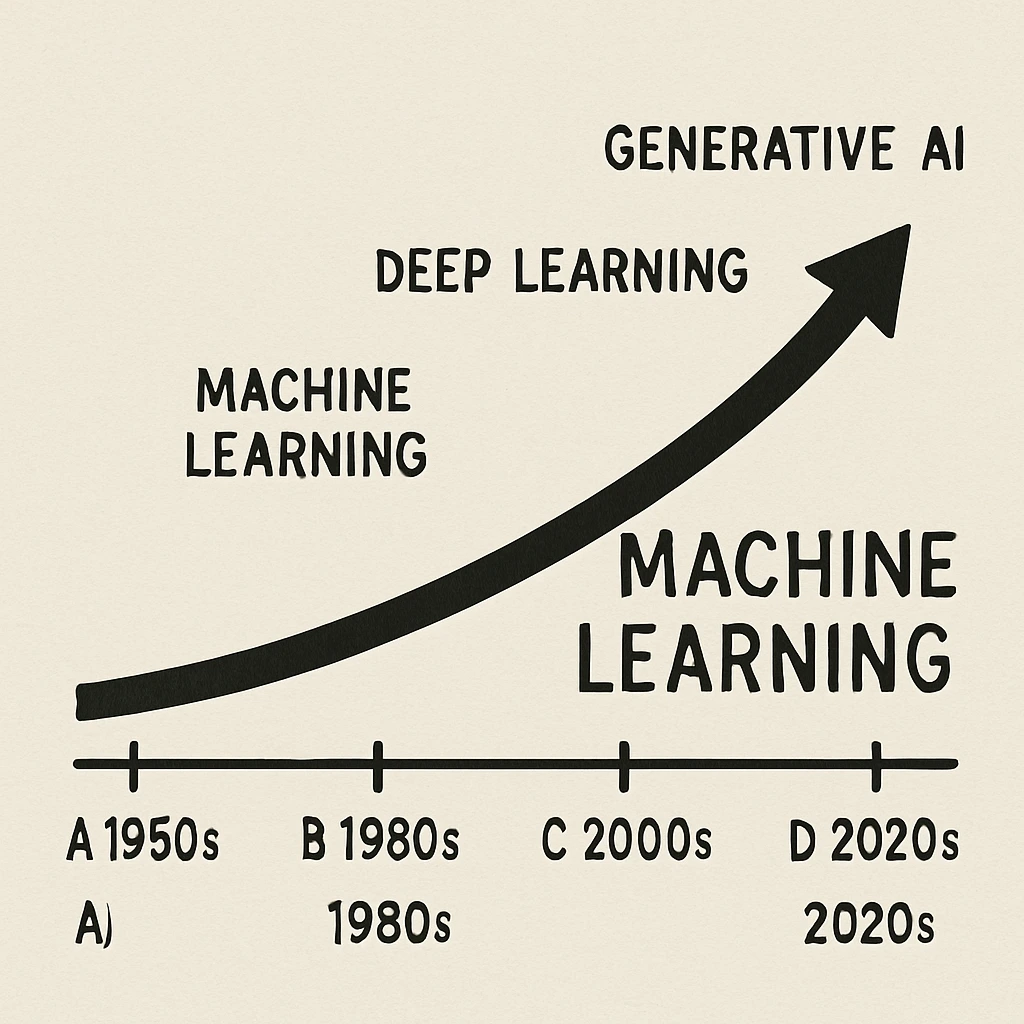
Machine learning models are transforming the world at an unprecedented pace, reshaping how we interact with technology and influencing the decisions we make daily. From recommending the next movie to watch to predicting weather patterns, machine learning is becoming an integral part of our lives. But what does the future hold for these AI models?
In the early stages, machine learning was a concept largely confined to academic circles, with researchers striving to teach computers basic tasks. These early methods were limited by the technology of the time, which restricted their application to simple tasks, such as sorting data or recognizing basic patterns. As computing power advanced, so did the ability to handle more complex algorithms, paving the way for more sophisticated models.
Machine learning relied on simple algorithms such as linear regression and decision trees. These methods were effective for straightforward tasks but limited in handling complex patterns. The introduction of neural networks marked a significant leap, enabling the creation of models that mimic the human brain's architecture. Deep learning, a subset of machine learning, uses neural networks to process vast amounts of data, which has led to breakthroughs in image recognition, natural language processing, and more.
In the early days, machine learning relied on simple algorithms, such as linear regression and decision trees. These methods were effective for straightforward tasks but limited in handling complex patterns. The introduction of neural networks marked a significant leap, enabling the creation of models that mimic the human brain's architecture. Deep learning, a subset of machine learning, uses these neural networks to process vast amounts of data, leading to breakthroughs in image recognition, natural language processing, and more.
Data is the backbone of machine learning models. The more data a model has, the better it can learn and make accurate predictions. However, with the increasing availability of data comes the challenge of managing and processing it efficiently. The future will likely see advancements in data management technologies, allowing models to handle even larger datasets more effectively.
The Impact of Algorithmic Innovations
Algorithmic innovations have played a crucial role in the evolution of machine learning. The development of algorithms such as convolutional neural networks (CNNs) and recurrent neural networks (RNNs) has enabled machines to understand and process complex data structures, images, and sequences. These innovations have led to groundbreaking applications in areas such as autonomous driving, voice-activated assistants, and real-time translation services.
The rise of big data has had a profound impact on machine learning. With the explosion of data from various sources, machine learning models have more information than ever to learn from. This abundance of data has enabled models to become more accurate and reliable, leading to more significant insights and discoveries. However, it also presents challenges in data storage, processing, and privacy, which are critical areas for future development.
The future of machine learning is bright, with several exciting trends on the horizon. These trends promise to enhance the capabilities of AI models and broaden their applications across various industries.
Deep learning will continue to evolve, with researchers focusing on improving the efficiency and accuracy of these models. Techniques such as transfer learning, which involves utilizing pre-trained models for new tasks, and reinforcement learning, where models learn through trial and error, are poised to gain traction. These methods will enable AI models to adapt more quickly to new challenges and environments.
Disadvantages
Those who only care about its speed in achieving defined goals would argue about this. Still, one of the problems with AI tools is vagueness and limitations in achieving uniquely defined results, for example, like the "Two-body problem" Sir Isaac Newton solved. These tools are also liable to make, suggest, and ultimately generate biased information based on cultural and political factors. Algorithms often make vague and biased assessments of situations, which puts off users from getting defined results.
Advantages
Before discussing the advantages, let's show how Artificial Intelligence works.
Artificial Intelligence operates by analyzing vast amounts of data to identify patterns and make informed decisions. It learns by using sophisticated algorithms that guide its performance. AI's core processes include data collection, analysis, and action.
Here’s a simplified breakdown:
By continuously learning from new data, AI evolves and develops its accuracy. This dynamic process allows AI to adapt to changing inputs and refine its capabilities over time.
The enormous advantages of AI tools put it at the forefront, making it impossible for its critics to win the argument about its disadvantages due to its advantages, such as fast and accurate efficiency in analyzing unlimited data, which is beyond the capabilities of any human being. It is easy to criticize algorithms that are biased and sometimes not accurate, but AI tools never rest, unlike human bodies that get tired because of lack of sleep, stress, or underlying medical conditions like heart disease and depression. etc.
Natural Language Processing NLP
To effectively understand machine learning algorithms and AI-powered tools, AI developers need to grasp the principles of Natural Language Processing (NLP). NLP is a branch of artificial intelligence that may initially seem magical, but its functionality becomes clearer when observed in action. The primary purpose of NLP is to enable computers to understand and interact with human language, including its nuances and complexities. Essentially, NLP enables computers to comprehend human languages, facilitating effective communication and supporting personal development strategies that change thought patterns. This field combines computer science and linguistics to process large volumes of text and speech, breaking down complex languages into manageable components to extract meaning, key information, and sentiments.
Types of AI: Narrow, General, Generative, and the best tools
Artificial Intelligence can be categorized into three types based on its capabilities and functionalities. Each type serves distinct purposes, addressing different needs within AI technology.
Understanding these categories helps clarify AI's diverse applications and potential. It also highlights how each type contributes to advancements in technology and society.
Applications of AI in Everyday Life and Dermatology
Artificial Intelligence seamlessly integrates into our daily activities. Its presence is felt in numerous tools and services we use regularly. In healthcare, AI enhances dermatology. It aids in diagnosing skin conditions and recommending appropriate treatments. This improves accuracy and speeds up patient care.
AI's role is expanding, bringing efficiency and innovation to various sectors. Its applications continue to evolve, offering smarter solutions every day. Promoting AI literacy and education is crucial to preparing for the future. As AI becomes more integrated into our daily lives, understanding its workings and implications is essential for everyone. Educational institutions should incorporate AI courses into their curricula, and public awareness initiatives can help demystify AI and promote informed decision-making.
Encouraging public-private partnerships can accelerate AI development and deployment. By collaborating with the private sector, governments can leverage industry expertise and resources to drive innovation. These partnerships can lead to the creation of policies and frameworks that support AI growth while addressing ethical and regulatory concerns.
Challenges and Ethical Considerations
Artificial Intelligence offers numerous benefits, including boosting efficiency and enabling new capabilities. It can transform industries by streamlining operations, real time decision-making, and reducing costs. However, it also presents certain challenges that need to be addressed.
Ethical considerations are crucial for AI development. Issues such as privacy, decision-making transparency, and biases must be carefully managed. Balancing innovation with responsibility is key to AI's progress.
Ensuring that AI development is inclusive and considers diverse perspectives is vital. Involving underrepresented groups in AI research and development can help address biases and create more equitable systems. Organizations should prioritize diversity and inclusion in their teams to ensure AI technologies benefit all members of society.
The future of machine learning models is promising, with advancements in deep learning techniques, explainable AI, and the integration of AI with other technologies. However, addressing challenges like data privacy, ethical considerations, and computational resources is crucial for continued progress. By preparing for these challenges and embracing new opportunities, we can unlock the full potential of machine learning and create a better future for all.
Addressing this wide range of factors is essential to make use of AI's full potential responsibly.